



Text, sound, images, and video do not automatically corroborate one another. A multimodal design is valuable when each material type helps answer a different aspect of the question or makes a comparison possible that one source alone cannot provide.
Give every material a purpose
Ask what an interview transcript can show that a drawing cannot, what a video can show that a transcript cannot, and what a participant explanation contributes to a visual selection. This prevents “multimodal” becoming a label for a collection of unrelated files.
Plan integration early
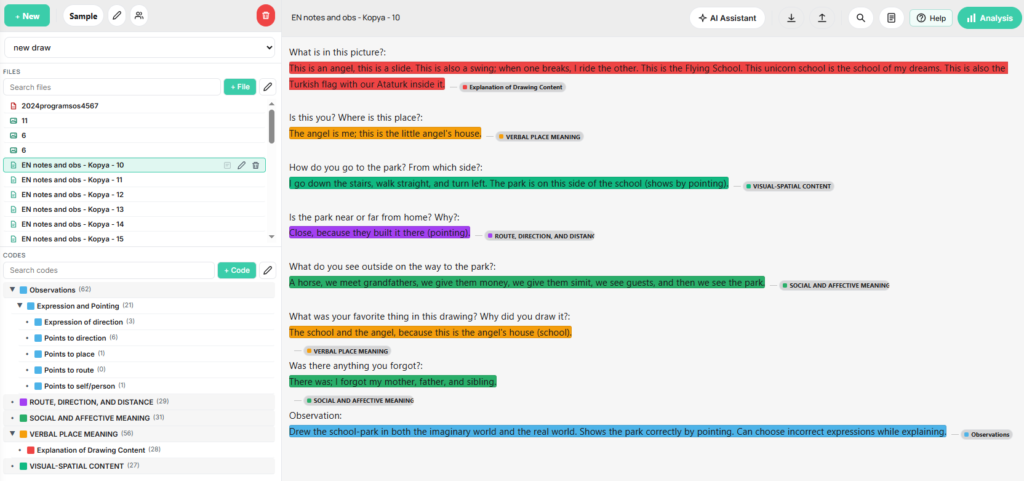
Decide whether evidence will be coded separately, jointly, or iteratively. A code can cross materials, but the definition should say whether it applies to visible features, spoken descriptions, or their relationship.
Preserve difference as evidence
When materials diverge, do not rush to treat one as the correct version. A mismatch between what is drawn, said, and observed may be analytically important if interpreted within context.
Questions researchers often ask
Must all sources receive identical codes?
No. Shared codes should be meaningful across materials; source-specific codes can remain necessary.