



Comparative synthesis is more than collecting studies that reach the same conclusion. It asks how findings relate across contexts, designs, populations, and measures. A careful comparison can identify convergence, meaningful disagreement, and areas where the evidence is too limited for a strong conclusion.
Compare like with like—then name the differences
Start by comparing studies that address a similar question. Then check whether they actually examine the same population, setting, intervention, timeframe, and outcome. Studies can share keywords while answering materially different questions.
Distinguish finding, interpretation, and implication
Report what a study found before explaining what it may mean. A study’s authors may offer an interpretation that is useful but not proven. Your own synthesis should make clear when it is describing evidence, identifying a pattern, or proposing a cautious implication.
Keep negative and mixed evidence
Disagreement is not a failure of the review. A null, negative, or mixed result can reveal boundary conditions, implementation differences, methodological limitations, or genuinely unsettled questions. Excluding it simply because it complicates the story weakens the resulting account.
A practical comparison routine
- State the question each study addresses.
- Record design, sample, setting, and evidence type.
- Compare the reported result and its stated limits.
- Use cautious language where the evidence differs or remains sparse.
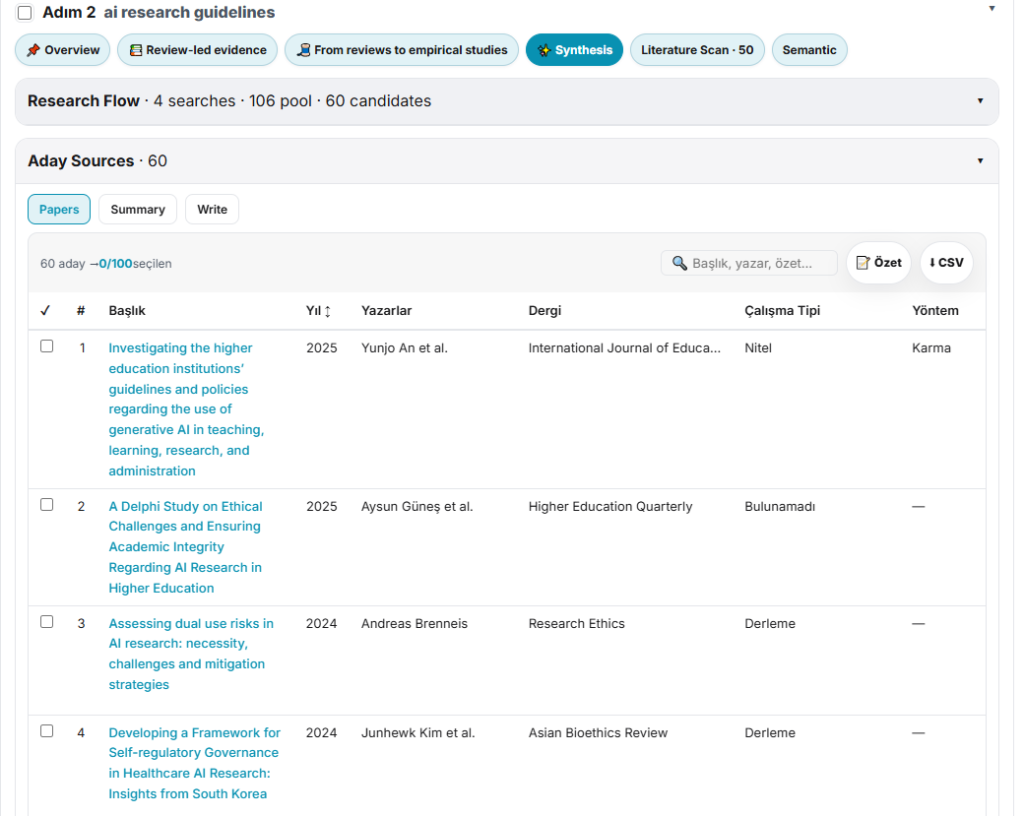
Try it in Byleron Research: Use Literature Scan to organise selected work, then inspect the evidence behind each generated comparison before reusing it in a manuscript.