



A useful literature search begins before the first search box. It begins with a question that names the phenomenon, the people or setting, and the kind of understanding sought. A broad topic such as “AI in education” becomes more researchable when it specifies a population, context, and concern: for example, how secondary-school teachers describe the use of generative AI for formative feedback.
Separate the question into concepts
Identify the concepts that must appear in relevant work, then list synonyms, discipline-specific language, and spelling variants. Keep a record of these choices. Search terms are not neutral: the vocabulary of policy, practice, and scholarship may describe the same idea differently.
Search broadly before narrowing
An early broad search helps reveal recurring terminology, influential reviews, and unexpected disciplinary boundaries. Narrow only after you understand the field well enough to justify the limits. A very small result set may reflect a narrow query, but it can also be meaningful evidence of an emerging or under-studied topic.
Make selection decisions visible
Decide what will make a source central, contextual, contrasting, or out of scope. Relevance, date, study type, setting, and methodological quality may all matter, but not every project needs the same criteria. The key is to apply criteria consistently and retain a brief decision trail.
Use research tools responsibly
Discovery tools can suggest terminology and organise a starting set. They cannot determine that a search is exhaustive or that a source supports a claim. Read the sources that underpin consequential arguments, verify bibliographic information, and record limitations in the evidence base.
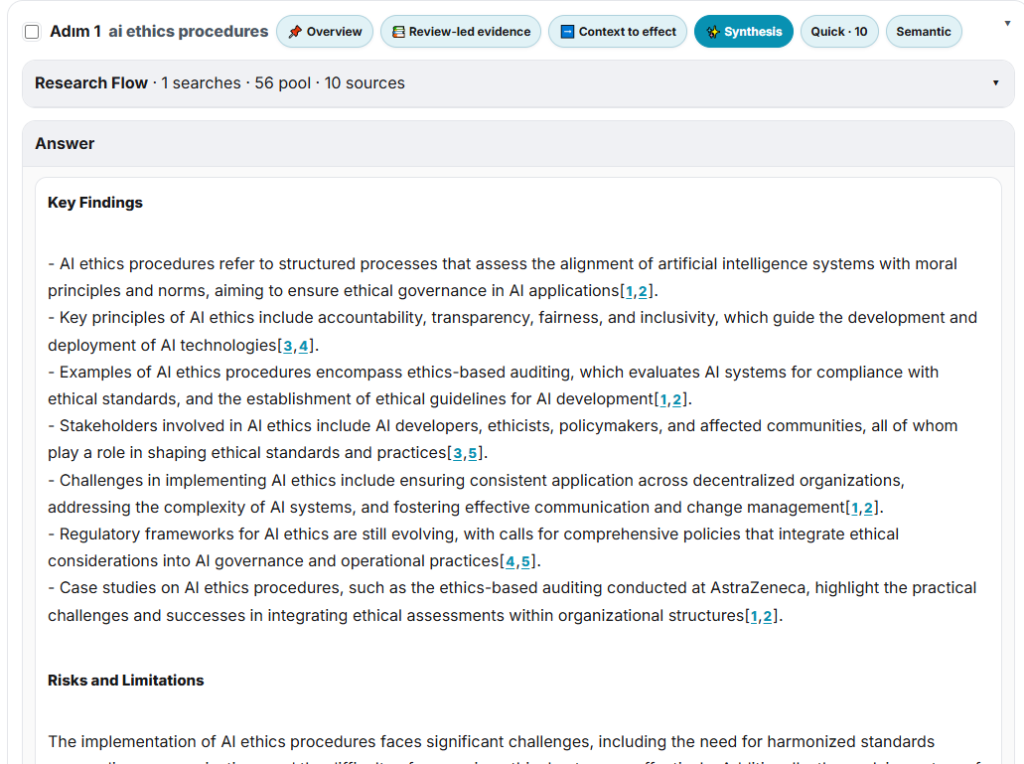
Try it in Byleron Research: Start with Quick or Semantic discovery, review the returned sources, then use Literature Scan only when you have a defined selection logic.